

 Posted by
 All right you primitive screwheads, listen up. We honestly aren’t all that interested in T20 cricketers who aren’t Jasprit Bumrah any more.
It’s a cliché to call bowlers cannon fodder in this format, but we’ve reached a point now where really it’s the batters who are the unchanging nondescript wallpaper. We found them beautiful once, but they got real ugly. They’re so samey, so relentless and so numerous. One after another they come, like The Army of Darkness; scores of armoured skeletons, every last one utterly bent on destruction.
Thankfully, we also have an Ash in the form of Jasprit Bumrah, a man with a good arm and an unmatched ability to dispatch these monsters in endlessly imaginative ways.
They see him standing there at the end of his mark. “Let’s get the hell out of here,” they think.
On the face of it, India’s batters shaped their 2026 T20 World Cup win, making 253 in the semi-final and 255 in the final. But for us at least, the more of them that contributed, the less interesting it became.
This feeling can happen in a T20 World Cup. Short package highlights in particular can feel a bit AI-generated: all bat swishes and shots of the sky, accompanied by commentators saying insightful things like ‘wow’. They’re broad brush pastiches shorn of distinguishing detail.
It’s numbing. Two England batters scored hundreds in this tournament; two India batters careered along at basically two runs a ball; Finn Allen did both. Some batter or other is always achieving something.
We admire it in a slightly detached way. The way previously low percentage shots have been transformed into not merely viable options but reliable ones has been revolutionary, but these are no longer unique skills. Not everyone can do these things, but an awful lot of people can – too many for it to remain entirely interesting, if we’re honest.

Bumrah, however, is still resolutely ploughing his own furrow in both stylistic and statistical returns. Just what does he think he’s doing? Everything he tries seems to work. On Sunday, he bowled Jimmy Neesham and Matt Henry with back-to-back full tosses.
In this tournament, Bumrah took 14 wickets in eight games and conceded barely a run a ball.
In a semi-final in which only one other bowler went at under 10 an over (Hardik Pandya, who went at 9.50), Bumrah condeded 8.25, and while his ludicrous return of 4-15 off four overs in the final largely only cemented a result that was already odds-on, the mere notion that there were Bumrah overs still to come had already twisted much of New Zealand’s earlier batting.
Even when he’s not doing anything, he’s the most interesting thing about a T20 game.
Hail to the king, baby.


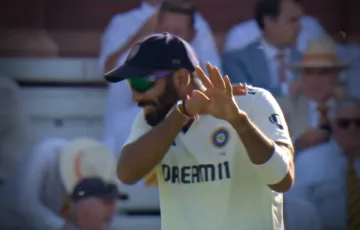
Hail to the king indeed.
I have watched only 2 T20 matches as far as I can remember, and they were yesterday’s T20 world cup final and the last T20 world cup final. And in both cases I only watched Bumrah’s bowling.
I’m afraid (code for ‘pleased’) I didn’t watch the final, knowing what the result was going to be. Not even Bumrah would have made the format mildly interesting. Maybe if there was a liberal sprinkling of Bumrahs in other teams, but then we’d have batting collapses that would make Mongolia feel comfortable with their T20 achievements.
My main gripe about T20, apart from the flaily bat fest, and the constant DJ mouthing off, and the constant interruptions between balls of shots of the crowd or umpteen replays of the previous sixes and/or wickets (to the point where it really wasn’t clear if a wicket had been taken or a six walloped was in real time or a replay), Hayden’s (and others) gobshyte, is the fact that, quite frequently, a game is won or lost in the first few overs of a match rendering the rest of the match pointless viewing. Maybe if some comedy was introduced, things would be more watchable. You know, take a page out of Afghanistan’s book.
No. I’m not with the conceit of this piece. I must be a primitive screwhead.
Admittedly, two of the three knockout matches were anti-climatic and the one exciting knockout match (the India v England one) was a flat track slogfest, arguably determined solely by Jasprit Bumrah but also arguably determined by Harry Brooke’s dropped catch early in the match and/or by Axar Patel’s astonishing catches.
While I agree that flat tracks that encourage scores well north of 200 per innings make for tedious cricket, and I agree that very few bowlers can have any impact on such matches – Bumrah being a rare, exceptional talent in that regard – I do not agree that such cricket defined the recent tournament, nor that it defines T20 as a format for international tournaments.
The early stages of the competition were mostly played on good T20 pitches suited to the level of cricket on show, making chase-able scores in the 160-190 range the norm. The competition showcased the emerging cricketing nations well. The fact that the format is somewhat of a leveller is a fact to be appreciated as helpful to the development of cricket rather than poo-pooed.
Jasprit Bumrah is actually an example that shows the wonderful nature of this aspect of cricket. Not only is he pre-eminent in this IT20 format, he is also a formidable, top-ranking test bowler.
I can hardly wait for the first class season to start and admit that the central summer slot being almost devoid of first class cricket here in England is a matter for concern and displeasure, but that is a separate argument about mindless scheduling, not a reason to disparage the shorter format.
Similarly, the choice the Indian cricket authorities clearly made to play the knockout matches on slog-fest pitches was an ill-considered one. We’re the Saffers the only team who were deprived advanced notice of that decision? I think we should be told.
It’s not about the format, or the matches, it’s about our interest in the individuals. We find we enjoy the narrative flow of a T20 match, but the specific batting feats and the players responsible run off this durable water repellent coating we seem to have acquired.
We might pause this analogy before applying it to how we feel about Jasprit Bumrah
In other, only slightly related news…
…I spent a few minutes this morning watching The Hundred auction. Just a few minutes, as (believe it or not) I have better things to do. But more importantly, I could only watch for a short while, as I found it excruciatingly dull and almost depressing viewing.
While I understand the principle of fixed budgets per team for players and a mechanism to try to ensure that all teams have a more or less equal dip at the talent pool, there is something dehumanising about placing a price on players’ heads in this way.
Possibly it is just the watching of the process that bothers me, rather than the outcome of that process. I’m thinking analogously about laws and sausages – best not to see how they are made.
I am keen to see who is going to be in which squad and will take an interest in seeing how each squad works out.
But watching the auction process reminded me of slavery and made me feel uncomfortable. I want our game to be professional…but perhaps not quite so professional. I confess to the cognitive dissonance in this line of thinking. Anyone care to help me?