

 Posted by
 If England know one thing about playing Test cricket in Australia, it is that successful tours cannot be built on right-arm fast-medium bowling. Except for the one that was. (Or was it? Let’s come back to that in a bit.) At the same time, right-arm fast-medium has an incredible gravity to it that history suggests England struggle to defy. Right now, Mark Wood is injured, left-armers haven’t made the squad, trust in Shoaib Bashir seems at a low ebb and all the occasionally-quick seamers are gradually being shorn of any distinguishing sharpness. Someone save us. It’s happening again.
Last time England came to Australia, they picked five right-arm fast-medium bowlers for a Test match and it went very horribly.
This time around, they picked five right-arm quick bowlers in Perth, two of whom were properly fast, and it worked in the first innings but not so much in the second when paces began to drop. The story wasn’t quite as simple as that, obviously – but it was a factor. The match again went very horribly anyway.

In the second Test, England hedged their bets. With Wood injured, they picked a batter who sometimes bowls spin instead of a specialist. This bowling attack fared even worse.
England’s 2025 take – the upper end of right-arm fast-medium
There is a recurring phenomenon in cricket, whereby right-arm fast-medium bowlers – cursed with the narrow perspective of being right-arm fast-medium bowlers in a world awash with such things – truly believe themselves to be radically different from one another.
It crops up all the time in interviews. The basic template for the quotes is, “Actually, we work well as an attack because we’re all really, really different from each other.” After this, the player in question will list some really niche and unremarkable ways in which he and his team-mates differ from one another, without at any point acknowledging that in far more meaningful respects they are, to all intents and purposes, basically interchangeable.
Your natural impulse upon hearing such comments is to feel like an ignorant outsider, unaware of the crucial nuances of Test cricket. Don’t feel like that. This is basically a group of similarly-dressed blokes in the pub, marvelling at their slightly differing tastes in indie bands and Quentin Tarantino films. “Man, we are all such individuals,” they think. No, lads, you’re not. It’s a big and diverse world out there.

It was Steven Finn voicing such thoughts on the England team’s behalf this week when assessing whether they’d picked the right bowlers for this tour.
“They’re not one-dimensional,” claimed Finn. “Atkinson comes over the top and gets steep bounce with a predominantly scrambled seam, Carse angles the ball in to right-handers and gets it to leave them at his best, Archer is Archer and Mark Wood quick and skiddy.”
All of which is technically true. But it’s also true that all four are right-armers who mostly bowl 85-90mph – or maybe a bit quicker in Wood’s case if things fall his way. None of them offers anything more meaningfully distinct, like being left-handed, or being a spin bowler. Hell, even out-and-out medium-pace would bring some variety.
Who will bowl in Adelaide?
Australia also dropped their spinner for Brisbane, we hear you point out in an affected, wheedling, Comic Book Guy voice. Absolutely true, but Australia also have far greater variety built into their attack through that man, Mitchell Starc.
Remember what Steve Harmison said that time about ensuring your attack has all the necessary components? Starc gives Australia a properly fast bowler, and a left-armer, AND he’s 1.97m tall.
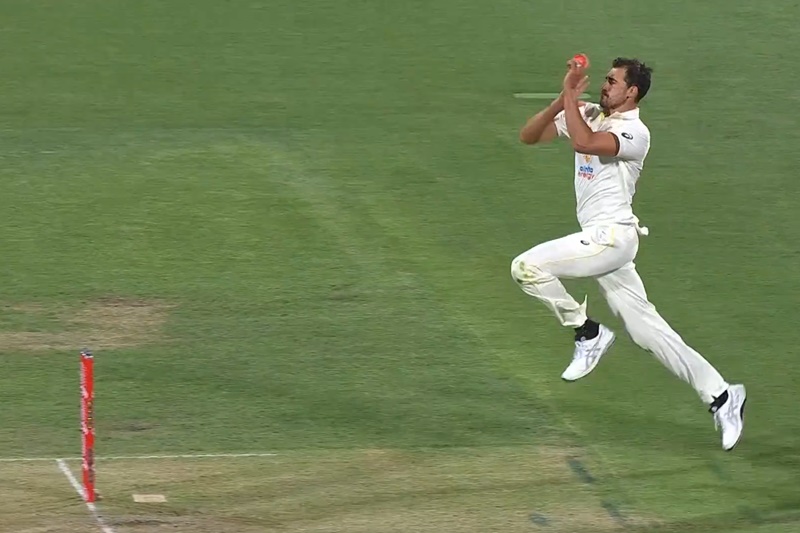
Height is an attribute, but not necessarily a point of distinction. If none of your quicks is unusually towering then you’re liable to find yourself in a land of fairly-tall sameyness. England’s four right-armers from the second Test are all between 1.82m and 1.91m, for example.
Jofra Archer, Gus Atkinson, Brydon Carse and Ben Stokes – will they go with the same four again?

We honestly have no idea. It was only last week that we were highlighting the fact that fast-medium line and length isn’t necessarily such a no-no with the updated Kookaburra ball. England’s 2010/11 Ashes victory was also built around such bowling – although it’s worth pointing out that the crucial first victory hinged on 10 Australia wickets falling to spinners and run-outs.
Pertinently, that win came in Adelaide, the location for this third Test, where the top wicket-takers of all time are Nathan Lyon with 63 and Shane Warne with 56. Shane had to wait until Day 5 on one occasion, but you can’t say he didn’t make the most of it. (See the ‘Amazing Adelaide, The Test That Never Happened’ chapter in our book.)

Historically, Adelaide has taken spin. There have only been a couple of day games here in the last decade, but R Ashwin was India’s most successful bowler in one of them. Going further back, Graeme Swann, Dan Vettori, Anil Kumble and even Sulieman Benn have taken five-fors.
So England surely want to play a spinner… except their spinner is Shoaib Bashir, who they suddenly don’t really seem to want so much after all.
Who would they drop for him? Will Jacks after he showed some fight with the bat in Brisbane? It feels like Jacks has earned himself another Test with that performance, even though it had nothing to do with bowling spin. (The fact they’ve found themselves in this position is why they never should have picked him in the first place.)

Would they replace a seamer with Bashir? If Jacks is still in the team, that would mean two frontline quicks, Ben Stokes and one-and-a-half spinners. That doesn’t sound likely.
So most likely Bashir remains on the sidelines and England will try to salvage this Ashes campaign with four right-arm quicks and a part-time spinner. That doesn’t feel hugely encouraging. Archer will need to bowl quickly and we suppose Josh Tongue could come in and add another 2cm of height.
And what of the samey batting?
Because this is the other way in which England have ended up a bit of a narrow Test team. The general principle of encouraging batters not to be fearful has certainly been a net positive when you think about where they came from, but it’s also resulted in a certain sort of player being picked to the exclusion of others. This means the team as a whole has erred on the side of an approach that has come to feel like the default.

How much this has skewed the decision-making of individuals, we can’t say, but it was striking that even Joe Root seemed unsure how to go about things in the early days of the Stokes-McCullum era – and it’s not like he’d previously been scrabbling around for some kind of method. Newer players with an inferior track record – so basically everybody – have surely been influenced even more.
Samey team, same result?
Hopefully not, but it’s a neat way to finish writing an article that’s found itself desperately in need of an ending.
Following-on
- Sign up for our email to follow the rest of the Ashes with us.
- Please also back us on Patreon. Pledges fund writing time. Simple as that.
- Finally, please buy our book, The 50 Most Ridiculous Ashes Moments. It looks like Amazon might be the only UK option if you want it in time for Christmas. It is still available from a few other places though if morals outweigh urgency.
- Update: It’s actually back in stock at bookshop.org

Yup. Oh dear.
The sad part is that these players are actually good enough to compete if they prepared properly (playing red ball cricket) and didn’t try to ‘play without fear’.
The psychological side is always the hardest bit. It’s understandable they’d still lean on that element though when it was so beneficial early on.
Nope!
As the pre-Test gloom deepens, and commentators line up to be first with their ‘Ashes of Bazball’ jokes, I thought it was worth putting the Stokes & McCullum era in context:
Bazball era: W26 D1 L21
2016-20 (pre COVID): W28 D5 L21
Michael Vaughan’s captaincy: W26 D14 L11
It seems the Bazball era is, in terms of simple results, actually not that different from the England norm. Vaughan’s main achievement (as England’s “most successful captain” apparently) looks like achieving more draws than his successors. Although not in Australia, where he never led the team I think?
https://www.bbc.co.uk/sport/cricket/articles/ceq1vl3y2pro – which ‘bit of dog’ would be most impressive to show in a cricketing context? A wagging tail?
Later Stokes says *you’re giving yourself the best possible chance if you’ve got a bit of dog in you”, which implies that consumption (or… insertion?) of the ‘bit of dog’ is necessary, rather than just display.
(More seriously, I am not impressed with the comments about ‘weak men’, it plays into a very narrow idea of what being ‘strong’ means, and what being a man means. Strength isn’t just stubbornly refusing to change your approach, or putting up a front)
Yep. I loved it when M&S took over and talked about the importance of fun, winning not everything etc, because who ever dares say that in the po-faced world of professional sport? Whereas the more recent “weak men” stuff feels like reversion to macho norms.
… Something something … Jack Russell?
I concur. For all the nebulous concept of ‘Bazball’ seems to have proved to be a little ahem one dimensional in terms of batting and bowling strategies, I rather approved of the idea of a more progressive management style and have somewhat disagreed with commentary to the effect that not screaming in players’ faces for their mistakes means there is no accountability, feeling that lerhsps a little of the supportive spirit of the national football side under Southgate might promote some well-doing as well as wellbeing in the team … but that ‘weak men’ comment rather made it seem that under a little pressure it is straight back to bollockings and blame.
As a corporate drone it is all drearily familiar …