

 Posted by
 It didn’t even take three days for England to lose the first Test in Perth… but the second Test performance in Brisbane was actually way worse. Here’s why.
1. It took longer
England achieved some historic lows in Perth, but at least they contributed to the brevity of the Test in a positive way too by bowling Australia out for the lowest total of the match. There was at least some cause for optimism in that isolated feat.
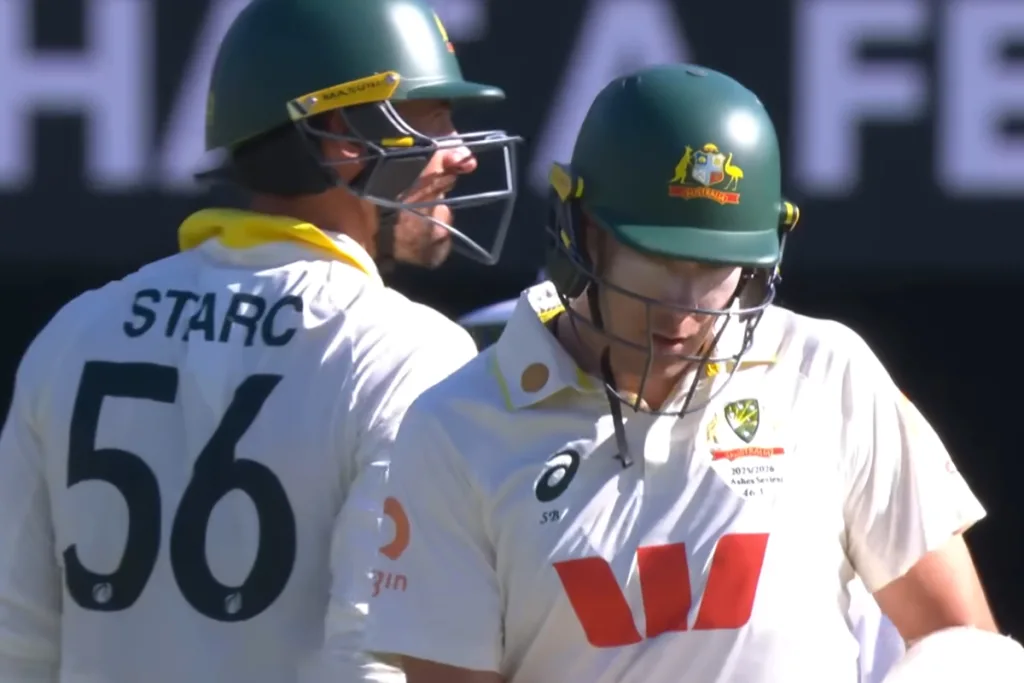
In contrast, while some observers blackly complimented the tourists on at least making it to Day 4 at the Gabba, consider what accounted for that extra time. If you pass two hours failing to dismiss either Mitchell Starc or Scott Boland then a longer match duration isn’t really an achievement, is it?
2. Australia had no spinner
Australia went into the first Test shorn of their captain and two-thirds of their seam attack and then introduced a policy of sending out opening batters basically at random. For the second Test, they figured they clearly hadn’t made themselves vulnerable enough and so also dropped their spinner.
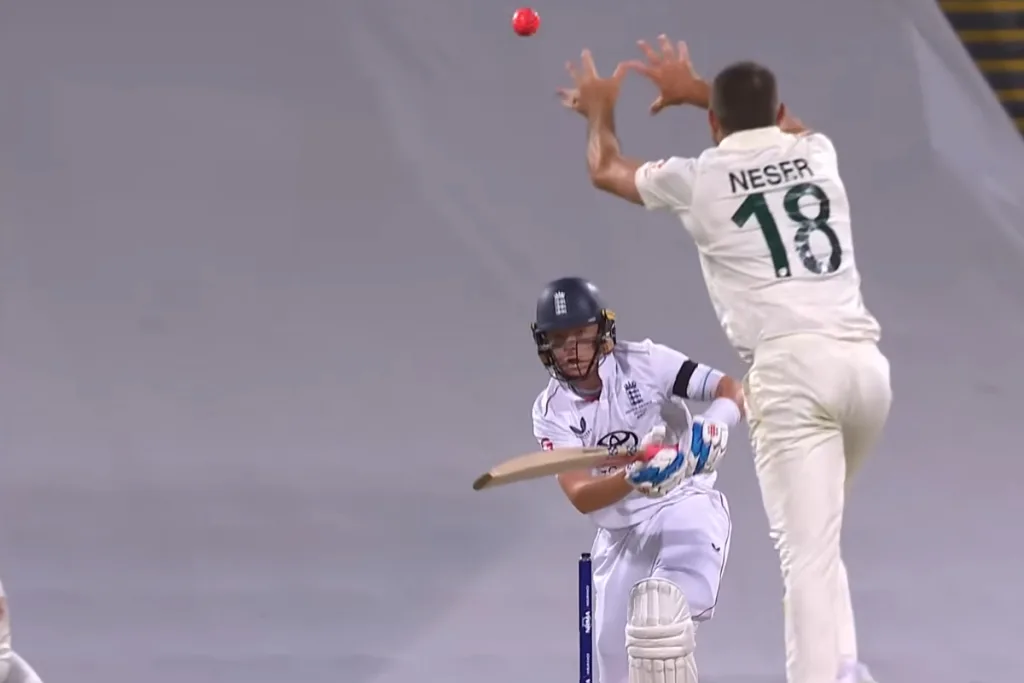
England steadfastly refused to exploit this by again failing to make it to the second new ball in either of their innings.
3. Fireballs-up
Ahead of this series, there was much talk of England finally being able to fight fire with fire with their bowling attack. Setting aside the fact this is a quite dreadfully ineffective way to fight fire, it’s also becoming quite apparent that fire isn’t the danger it once was anyway.
At some point or other, somewhere or other – we can’t be bothered to find exactly where – we highlighted the fact that scores have been significantly lower in Australia for the last few seasons. It’s widely accepted that a lot of this is down to a change to the Kookaburra ball.
It was therefore a little grim to watch England’s bowlers send down ineffectual and expensive bouncers in this Test on a pitch where the Australians weren’t merely focusing on bowling a tight line and length, but were quite often doing so with the keeper up to the stumps.
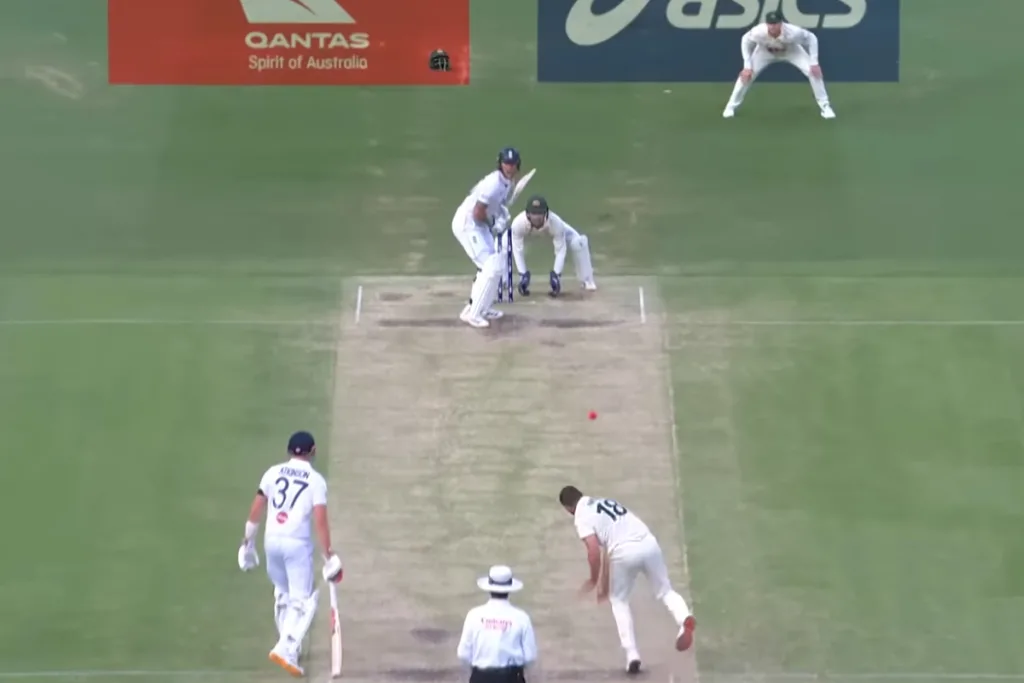
Quite why Alex Carey felt it was necessary to do this when he’s already proven himself more than capable of executing stumpings when standing back is a subject for another day. (Read all about that famous moment here!) Perhaps he was just missing Nathan Lyon. We also shouldn’t let Carey’s exceptional performance up to the stumps distract us from the more important point that it was even an option.
As Ian Healy worded it, Carey was keeping up to the stumps against some “quite fast” bowling. They’re not the medium pacers of our utterly disingenuous headline, but Scott Boland and Michael Neser do not whistle it through and only in such company would Brendan Doggett be the man called upon to bowl half-trackers.
4. Brydon Carse’s stippling
England’s bowling was epitomised by Brydon Carse, whose line and length was so consistently erratic it was like he was trying to colour in his entire pitch map, one dot at a time.

Carse’s 4-152 was one slice of luck away from becoming the worst England five-for since Dom Bess’s against Sri Lanka five years ago. He was still the top wicket-taker – but what does that really mean when he was shipping runs so rapidly? What was his actual contribution to this match? That England would have taken those wickets and conceded that same 500-plus total a little slower without him?
5. Will Jacks
Will Jacks did some good stuff, but his is such a bleakly familiar England Ashes tour selection, it can’t help but make our heart reflexively sink. He isn’t a real spinner, so isn’t going to take wickets, and however diligently he batted on this occasion, it seems pure wishful thinking to imagine a man with his career record will make meaningful runs when those who come in ahead of him can’t.

Honestly, best of luck to him. He took a screaming catch and batted for three hours in the second innings. We just can’t shake the feeling that the promise of the latter will have a ‘false’ inserted before it with the benefit of greater hindsight.
Last orders
Amazon still looks to be the only UK option if you want to buy our book, The 50 Most Ridiculous Ashes Moments, for someone in time for Christmas. You never know though – sometimes other retailers get a few more copies in, so here’s a page with links to a load of other places you can try.
Less problematically, you can get our email extremely easily and free of charge, simply by giving us your email address (which we will not share with anyone).
Please also consider backing us on Patreon. All pledges are ploughed back into the site as writing time, so it’s a very selfless thing to do and all the other readers will love you for it. We’ll be rather grateful too.

Jamie Smith seems to fly under the radar. Threw away the last Test against India. No discipline with the bat this series (he should be batting long with the tail), and poor keeping too.
Oh plenty of people’s radars have been trained low enough to pick him up. We’ve seen/heard it suggested in multiple places that he be replaced by Pope, which suggests that at least some see his performances as a bigger issue than the man who is currently favourite to exit the side.
Our view is that Smith is still in credit, but hasn’t yet shown any signs he’s cut out for the greater scrutiny of Ashes cricket. It feels the most likely outcome right now is that he’ll burn through that credit in short order, but he should at least be given the chance to do so.
Pausing for a moment to crow over my comment last week (essentially predicting all of this, with reasons) there are a few points about the England batting that seem not to have been made.
First, the paradoxical role played by training drill. What drills do is ingrain repetitive behaviour, which is why we do them; but they are exceptionally good at ingraining inappropriate behaviour, especially when it is repeated. The neurology of this is synaptic reinforcement of the behaviour. This is a well-known problem in playing musical instruments (yes, repeatedly playing a passage with the a mistake in it creates an almost insuperable obstacle to eliminating the mistake later). It obviously applies to batting too. Modern batsmen, in the age of the bowling machine and dog-thrower are much more drilled, and much less able to free themselves from habits than their predecessors, who worked at disciplines, rather than repeated actions. So deciding not to drive on the up may be next to impossible for batsmen trained in the modern way, when once the training has taken place. It is in the cerebellum rather than the frontal cortex that the guys with problems (Ducket, Crawley, Pope, Brook) have problems. Telling themselves to eliminate the risk will not be very effective, although it obviously must be tried. It also comes as no surprise that the Gabba training sessions were counter-productive.
Second, batsmen who do not have this syndrome may well be able to continue playing in a more traditional (and effective) manner. The Australians may work out weaknesses to target in Root, Stokes and Jacks, to name the only three who are not clearly affected by learned vulnerabilities. But this takes time, and also give the batsman time to work out a solution. So there is hope that three wickets will continue to be sold dearly, at least until it all gets too much.
Third, my intuition is that Jamie Smith would be fine if he didn’t have to keep wicket. Having to concentrate as hard as a wicket keeper needs to do while the Australians make 500 is not a recipe for maintaining his form as a batsman, even at number seven. If the side could bat long enough to rest the bowlers, who could then be fresh enough to bowl out the opposition in 60 overs, there would be less physical and mental pressure on Smith. Gilchrist wouldn’t have found it easy to be Gilchrist in this England side, just now.
Finally, a decision whether to pick Bethell should be based on an assessment of whether he belongs to the robot group or the thinkers. My impression of his play in New Zealand was that he was a disciplined thinker, but with outstanding stroke-making ability on top. If the team management think he is a robot, they would be right to expect the Aussies to eat him for breakfast, so there would be no point in substituting him for Pope.
We agree with your point about Smith. Australia tours have consistently been hard on England wicketkeepers and this is a large part of the reason why. It is utterly draining to be so involved for so long.
On Bethell, it’s probably not a question of how well suited he is, so much as whether he’s a less bad option than Pope. If they feel Pope’s shot, he’ll probably get a game on that basis alone (and at least he looks solid off the back foot).
On drills, this is only tangentially related, but one of our all-time favourite nuggets of cricket wisdom was from David Gower, who said the one thing he always tried to avoid when he was out of form was practising, for precisely the reasons you give.
For a side that spends all the time not actually spent playing in an Ashes series, preparing for one, England are somehow really bad at playing in an Ashes series, and especially awful at playing one in Australia.
You do wonder whether the monomania might in fact be counterproductive…
As so often at times like this, there is some terrific writing around.
This is one of the best I’ve come across:
https://arrangements.substack.com?utm_source=navbar&utm_medium=web
Thanks for that link Sam. Indeed, a good read on a number of points.
Perhaps I’m being too simplistic, but I thought Mr Smith hit the nail on the head in his interview with Mrs Guha. It came down to the timing of the night session where Australia were able to take more advantage, sloppy England bowling aside. Having typed that, Australia’s strategy was more intelligent than England’s.
Also, I thought the reason Carey was up to the wicket was to keep the batsman in his crease thereby ensuring they don’t get down the pitch to offset the solid line and length of the pacers.
If we do lose 5-0 and the great gnashing of teeth, wringing of hands and debates about what went wrong unfurl and someone else gets put in charge then will we see another 4 year cycle focused on how to play in Australia go on? And if so, will they determine that having left arm seamers called Mitchell are the determining factor? Will we see Alec Stewart or whoever is Key’s replacement offering some sort of incentive for 4 matches in the county championship for left arm Mitchells, do runs against them count half and they only have to bowl 4 balls an over with 2 automatic dots?