
 Posted by
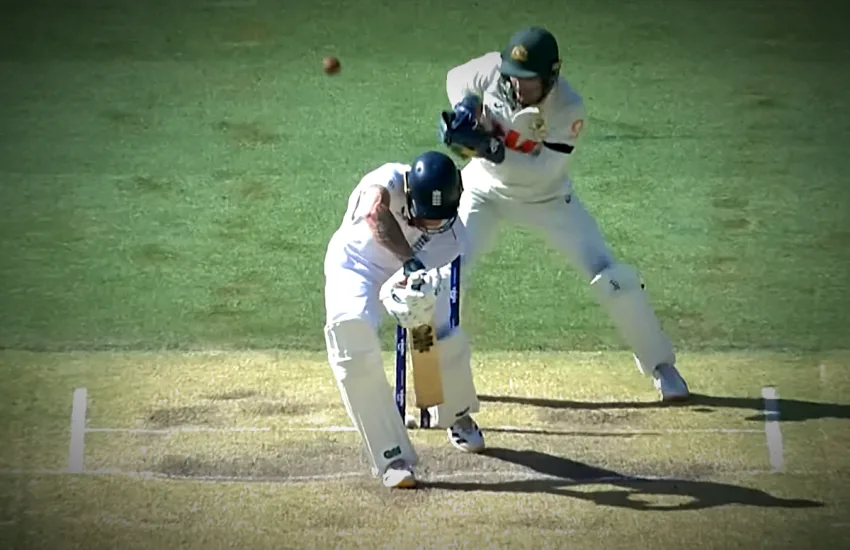
 How do you feel about this one England fans? We feel like the team went from monochrome dreadful four years ago to at least striving for technicolour peaks. The bleak truth is that they’re 3-0 down after three Tests and we’d still chalk it up as progress.
Let’s quickly recap the loss of the 2021/22 Ashes, just for context.
- England made 147 in their first innings of the series, Australia replied with 425 and won by nine wickets.
- In the second Test, England made fewer than half of Australia’s runs in the first innings and lost by 275.
- In the third Test, Australia made 267 and WON BY AN INNINGS.
It wasn’t so much the fact England lost those first three Tests, it was that at no point did it feel possible to envisage any other outcome.
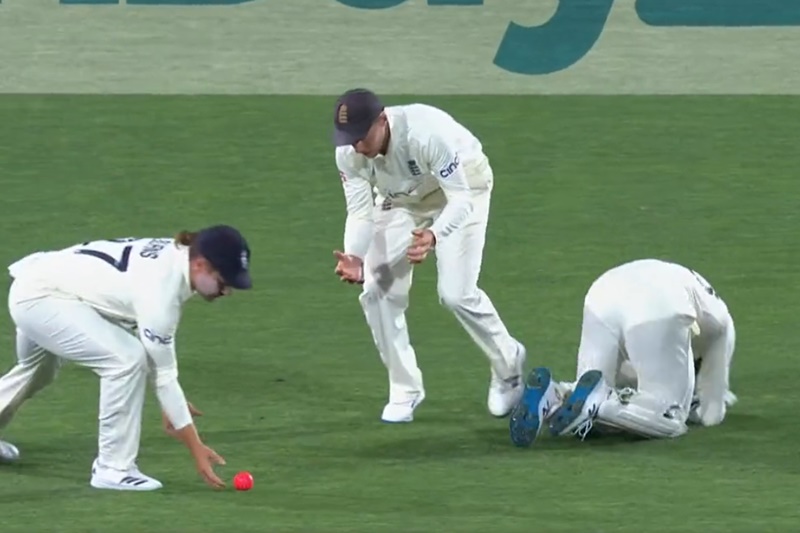
Paul Collingwood meant something slightly different when he said they were sitting ducks, but that’s nevertheless a pretty good assessment of how they approached the series; as passive targets just waiting for the worst to happen.
Ben Stokes and Brendon McCullum subsequently imposed a, “let’s at least throw a few punches,” philosophy that provided a plausible if unlikely course of events whereby England could win matches that would previously have always ended as sleepwalks to defeat.
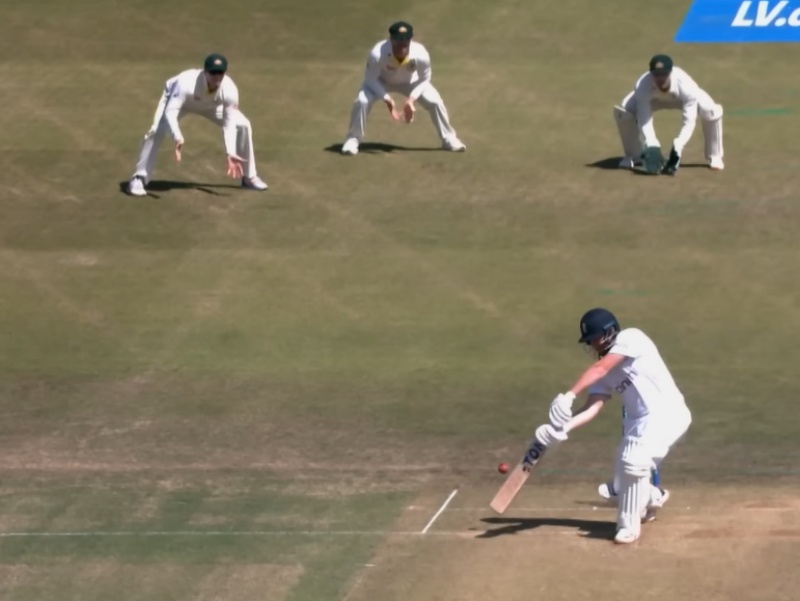
Sometimes it actually worked. Surprisingly often really. These higher highs were more than welcome and they dragged England up to a better level overall. But not to a stunning level once you factor in the off days. And those off days couldn’t really be entirely suppressed with an approach like this.
England sometimes talk about the ‘high ceiling’ of an individual player, but they probably bounced off their own collective ceiling a year or so ago. There was no raising it without more players getting an awful lot closer to those idealised fantasy versions of themselves.
2025/26 punch-throwing
We count one meaningful jab so far – Australia’s first innings in Perth – plus the glancing blow of Joe Root’s Brisbane hundred.
That doesn’t feel like much and because there’s always plenty to take issue with on a losing Ashes tour, it’s tempting to identify Where England Went Wrong. But it’s a fallacy to view the series as some Choose Your Own Adventure book where if you make the correct decisions at the end of each page you’ll ultimately emerge victorious.
People love to pinpoint mistakes, but sometimes you just can’t make enough right choices. Honestly, the team that wins the Ashes is generally the one that’s good enough to get plenty of things wrong and emerge unscathed.
Misshapes, mistakes
Australia suffered a bunch of injuries, didn’t pick their spinner, stumbled on an opening partnership basically by random chance and won anyway.
In contrast, England simply weren’t good enough to get away with anything. They’re a team whose greatest performances have stemmed from taking risks, but there’s a reason why cricket has always valued averages over highest scores. It gives a truer measure of worth over a span of time.
Zak Crawley retained his place in this side in large part because he was expected to perform better in Australian conditions. He has indeed performed better, but his baseline is so low that he could have excelled himself even further and it still wouldn’t have been anything incredible. Conversely, there was a good chance Ben Duckett’s desire to hit every ball would prove counterproductive in these parts and so it has proven thus far.
Basically, England hoped conditions would outweigh class for one opener, but that class would outweigh conditions in the case of the other.

Ollie Pope has been an okay number three. Believe it or not, he actually averages almost 40 in that spot. But for whatever reason – the relentless scrutiny and intensity or whatever – he invariably performs worse in big series. The Ashes is the biggest series. Pope has been terrible.
It’s early days for Jamie Smith, but he’s been a little bit the same – albeit tempered by the fact he isn’t a 60-Test veteran and the fact he made a few in his most recent innings. Smith was the right pick, but he’s another question mark; another unknown that may or may not have worked out that England needed to get lucky with given the sheer volume of other question marks in the equation.
The bowling attack is callow and has bowled like it. The most experienced, Jofra Archer, has missed a lot more Test cricket than he’s played. Nobody else, other than the captain, has done much bowling at all in Australia. Gus Atkinson arrived with the most promising record and method and so far has been the least effective.

Up until this tour, these guys had performed well enough. England could have kept Jimmy Anderson around but how would that have looked had he failed or succumbed to injury – both of which would have been entirely plausible outcomes?
A few years back, England gambled on a spinner. Surveying the alternatives and not seeing much that inspired confidence, they concluded at least Shoaib Bashir could work out. As with several other things, they saw one possible sequence of events where he would become a more threatening option than anyone else. Alas, those events didn’t happen and then, with all those other things-that-might-or-might-not-work-out already in play, they chickened out.

Would picking Bashir have helped? Probably not. Would picking someone like Jack Leach instead have worked out? Looking at those first two Tests in particular – again, probably not.
So spin-wise they had three options and no obviously correct answer. Presumably one would have worked out better than the other two, but not to the extent it would have made much difference.
We feel similarly about the team’s much lauded/derided/mocked approach to batting, which has only intermittently been attempted to our eyes. (Most likely an enforced absence stemming from the accuracy of Australia’s bowlers.)
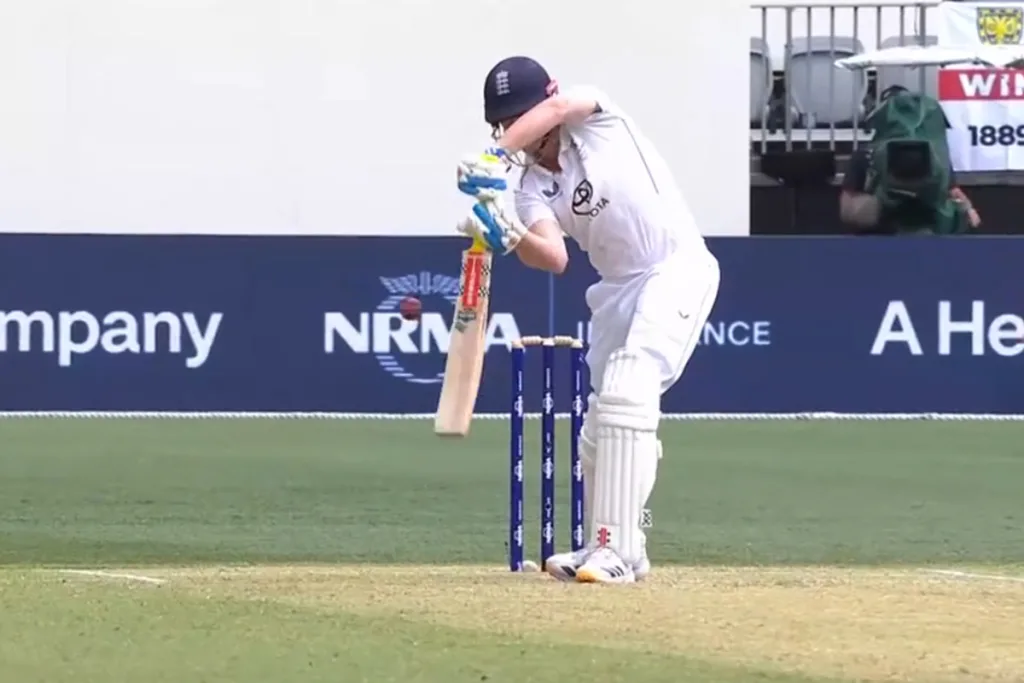
England’s batters have at times seemed hell bent on ‘giving it away’, but in other innings the majority of them have actually lost their wickets playing defensive shots. Whatever they’ve tried to do, the one constant has been that they’ve been dismissed for fewer runs than their opposite numbers.
When Ollie Pope blathered on about putting pressure on the bowlers and sometimes absorbing it and being crystal clear about which to do when, he was essentially saying, “We need to be better at batting.” Making the appropriate choices for your level of ability is what batting is – and again, better players have more margin for error.
We’ll use the one thing we’ve got more of
Australia haven’t really blooded the next generation, which represents a not insignificant vulnerability should they need to replace anyone.
Steve Smith missed the last Test. Josh Hazlewood is sitting out all five. Pat Cummins missed Brisbane and Perth. Usman Khawaja was unavailable in Brisbane and hurt in Perth. And they’re winning 3-0.
Australia responded to Khawaja’s injury by setting their openers to ‘shuffle’. There is no clearer measure of the difference between the two sides than the fact that they tried two stand-in openers in the span of one Test and one of them performed well enough to get the gig for the rest of the series and possibly beyond.

Australia make dumb decisions and win. England make dumb decisions and lose.
Decisions of course matter. But Australia have had the raw materials that taking the worse option often hasn’t been so bad, while even some of England’s better decisions haven’t really ended up especially helpful.
Where did it go wrong for England?
Certainly not solely with the coach or captain, who initially played a poor hand massively better than the previous England management team, even if they’ve perhaps not played it quite so well more recently.
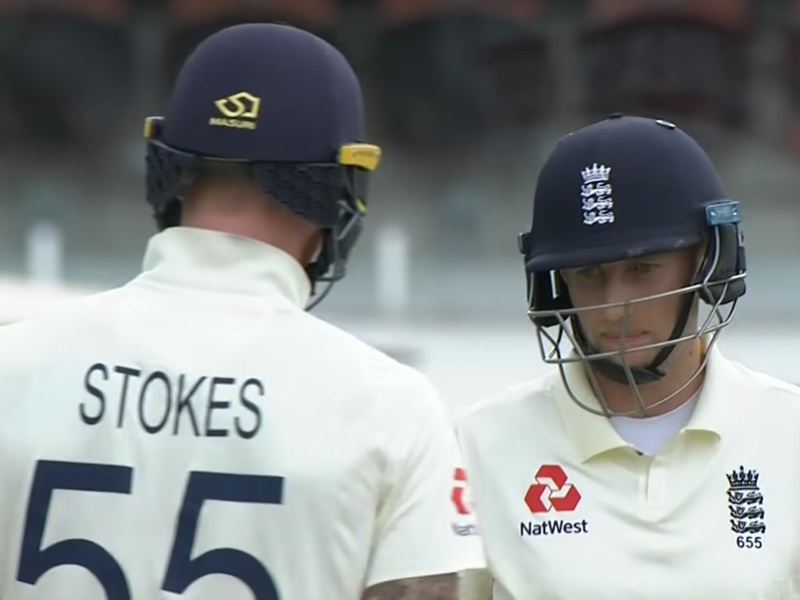
Not massively with the players either, we’d argue – except insofar as a couple of them have manifestly failed to improve over the course of unjustifiably sizeable Test careers.
Team selection? Certainly a bit – but a lot of the wishful thinking that’s been exhibited is really just a reflection of the alternatives. Rob Key has certainly overshot in his distrust for county cricket performances, but that doesn’t mean there wasn’t a basis for doing so. The domestic game remains low intensity and we struggle to fathom the huge collective aversion to playing spin bowlers these days, regardless of how they’ve chosen to schedule red ball matches. (As Graeme Swann pointed out last week, it turns square in England in September.)
A lot of us don’t like this insidious school scholarship system that’s developed either. A good cricket team contains all sorts, but England’s seems to contain fewer and fewer sorts with every passing year. The many paths into the England team seem to have narrowed to just one.
Finally, there’s the basic fact that when playing in the opposition’s home conditions, you already start at a disadvantage.
All these things stack up. None is unsurmountable on its own, but queue them all up, page after page, and it might just be that the path to victory is no longer there to be read.
- Sign up for the King Cricket email to have our upbeat festive Ashes analysis arrive in your inbox automatically.
- Back our Patreon so the site can survive to the next Ashes tour.
- Buy our book because it’s a great book and you’ll love it.

Good assessment KC.
By the way, is it just me, or does the Aussie team come over as quite likeable?
In other (overnight) news, two openers scored more runs than the entire opposition did during the whole test match, and that’s with the opposition scoring 420 in one of the innings.
We certainly have nothing bad to say about foreword-penning Pat Cummins, but yes, agree several of them seem perfectly decent and not hugely annoying human beings despite being Australia cricketers.
That wouldn’t be the foreword to the magnum opus “The 50 Most Ridiculous Ashes Moments” that’s still freely available in all good book stores while stocks last would it?
Emphasis increasingly on ‘while stocks last’ in this hemisphere, pleasingly-yet-also-frustratingly.
At the risk of being unnecessarily reductive, the England players aren’t very good and the Australian players are.
For what it’s worth, reading the final paragraph of the article again, we do actually believe there was a possible path to victory this time. It was just a very difficult one and England had very little margin for error whereas Australia had plenty.
The possible path to victory (which did certainly exist, with maybe 5% probability) was to modify the McCullum Doctrine with some added rules: quick bowlers to mainly pitch it a yard further up than they are comfortable with; slips and keeper to stand roughly where the Australians do (not 5 yards deeper); batsmen not to drive on the up before Sydney. But this was not available to them conceptually, because (to quote the immortal banality of Kevin Pietersen) is is not how they play.
We wonder whether some of those rules were in fact in place or at least strongly suggested. You watch Joe Root fall to his nothing shot and he surely knows it’s a low percentage shot at certain times and yet he can’t help but play it. Some of these things are so well grooved they’re hard to suppress when the pressure’s on. Several of the bowlers have just looked short of game time. Sometimes they go to a short pitched plan because it masks the fact they’re quite often bowling too short by accident anyway.
Beaten to a Pulp.
Lovely.
Not sure Australia’s decisions can be characterised as dumb. Their backroom staff seem to plan for pretty much any eventuality. I think I recall them saying in interviews that Head-as-opener is something they’d be considering for years. Their bowling rotation has been pretty thoughtful.
But I suppose this all just reflects the characteristics of the two sides right now. Australia’s leadership is more cautious than England’s, so the risks they take are not going to be as much of a gamble, hence selecting older players to come in to the side and shuffle around the batting order. Having said that, I get the sense the England’s mindset is actually a bit muddled at the moment, which is why I had some sympathy for Stokes after the first Test when he said that they weren’t playing their way enough.
They often don’t look dumb in hindsight, but if Travis Head hadn’t played brilliantly, they’d have played out the first Test with a debutant partnering two different makeshift openers at the top of the order. There’s at least one shonky decision in the mix there; probably multiple. But it didn’t matter.
Picking Khawaja at all looked very questionable after the first two Tests. Bringing Marnus back could have gone horribly wrong, given his recent Test form. Boland went to all parts in the last Ashes and in the first innings of this one. Persevering with an ageing four-man attack, three-quarters of which has been injured, almost smacks of wishful thinking.
Point is, the players have been good enough to either overcome these decisions or make them look like good ones when they may or may not have been the best.
“As with several other things, they saw one possible sequence of events where he would become a more threatening option than anyone else. Alas, those events didn’t happen…”
My main criticism of this interpretation is that, by passing over the England setup’s agency in this process, it absolves them.
There were many ways in which, across the last two years, they could’ve tested, developed and challenged Bashir (and other spinners) regardless of the indifference of the county game. But they didn’t.
That’s partly true. They’d argue they did quite a lot with him, but then they did set themselves a stiff challenge trying to get someone so inexperienced up to Test standard.
It’s worth noting that the two most recent series defeats Australia has had at home were to India. Whilst there were many individual contributors to those series victories, they were both built around a backbone of Pujara just batting and batting and batting and wearing Australia down so the likes of Pant could “Bazzball” away to their heart’s content. Seems like this English side is missing a player that just saps the opposition bowlers and has too many batters just blazing away while the bowlers are still fresh. A varied batting lineup can be just as valuable as a varied bowling lineup.
Wholeheartedly agree. Variety is helpful and this England team is just a bit too one-note in both batting and bowling.
Hard not to think of the Pujara video linked and referenced in this article. https://www.kingcricket.co.uk/cheteshwar-pujara-is-trying-to-sidle-out-on-the-sly-but-we-aint-gonna-let-him-are-we/2025/08/27/
Obviously anyone can get injured, but it’s annoying Anderson was jettisoned and then Woakes got injured. The wickets have been the most “English” in living memory and yet we were obsessed with speed. Scrutiny on the coach of course but in 1999 England rugby kept hold of Woodward after failure…just saying…
Suppose they wanted to give Woakes a chance to make a case for selection and they were open to taking him, but it does feel a little like they denied their Ashes bowlers time with the new ball. Agree it would have been interesting to see how more accurate fast-medium might have fared this time around with the current Kookaburra, but we’re also aware that as with a lot of the stuff mentioned above, a lot of things you imagine might work out on Ashes tour very much don’t in practice.
How could they have tested, developed, or challenged between them? They played them, particularly Bashir, in all conditions. I still hold that Liam Dawson might come on this tour.
Given the capacity they have to exert over playing time and location and the funds at their disposal, they could’ve coached him (or, heaven forbid, more than one player 😱) under preferred conditions, at preferred locations with preferred intensity.
They could’ve recognised the County game isn’t producing spin and taken ownership of prioritising it themselves (as they’ve done with pace and with batting development).
But spin isn’t important…until suddenly it is.
He went on a Lions tour to Australia this time last year and played all three matches.
Good push back, KC and I acknowledge there has been work.
But firstly – if you have one choice, you have none.
And secondly, I’m thinking more about a strategic approach towards ensuring England spinners have an appropriate development path (over years), rather than a short-term training plan to hothouse an individual.
Well certainly can’t argue they’re doing a good job of developing spinners, despite all the Lions tours and spin camps.
It does make it harder that there are so few professional spin spots available – not even one per county, which you’d think would be the bare minimum.
Re videos doing the rounds of Duckett, Bethell et al.
Yes, outrageous and unprofessional. But amid the inevitable pile-on, I hope we can take a moment and remember what happened to Graham Thorpe.
Yes. Media in full scapegoat-mode. Despite the general consensus being that the team played better after Noosa than before…
But I find it confusing that Rob Key has announced an inquiry into what happened at Noosa. Wasn’t he there? Didn’t he keep an eye?
Lots of comments along the lines of ‘hes an athlete.’ Yes, so, literally one of the least important jobs with the most pressure and expectation heaped on. Who will suffer if duckett fails in his work? Why do we hold opening batters to a higher standard than politicians, doctors, and cricket bloggers?
He’s an athlete so he’s paid a very decent sum of money to keep himself fit enough to play sport at an elite level which would not seem to be compatible with drinking large quantities of alcohol.
He didn’t do it at lunch on day two though.
We’re not saying it’s a performance enhancer, but if you think drinking large quantities of alcohol is incompatible with being an elite cricketer, you’ve missed a lot of colourful stories about many of the sport’s greatest practitioners.
Festivus came and went without, unusually, so much as a single mention on this website. Plenty of grievances-airing in the comments on 23 December, though, so I suppose we can at least surmise that many KC readers were in the Festivus spirit.
Daisy and I spent much of Festivus (yesterday) looking at kitchen fixtures and sanitaryware, so I suppose we went a bit “Festivus potty” in our own way.
Best wishes of the season to everyone who reads here, whether your thing be Festivus, Christmas, Twixtmas, New Year, or whatever.
With our usual disregard for the calendar, we’re simply a bit late.
Thus spake the chap who doesn’t do requests!
Even if we did do requests (WHICH WE DON’T), we certainly wouldn’t turn them around that quickly.